Pages

Wednesday, June 03, 2009

Husband Worship or Deity Worship?

Updated 2/27/2015

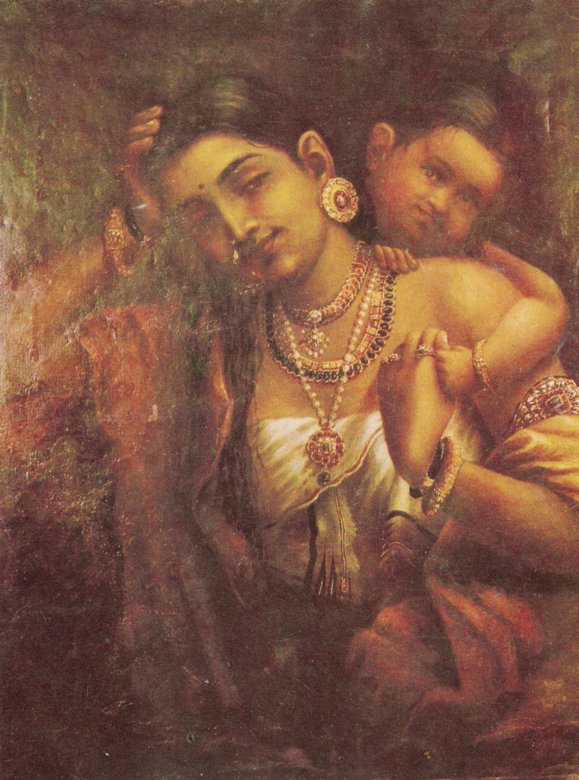
First of all, if someone is providing me with a home and all that is needed for a happy and healthy life, is he not worthy of worship? I love the Indian movies where the husband returns home and the wife first greets him a lamp and flowers and so on!

But a question may be raised, if a woman is seeing Krishna in everyone and everything, thinking of the Lord 24/7, or simply aspiring to by strictly following the bhakti yoga path by which Krishna orders in Bg. 8.7 and 18.65 to always think of Him, why do some other parts of sastra say things like, "Her mind should only think of her husband’s form, qualities, and activities"?

In my understanding, such is advised for an ordinary woman, unaware of Krishna's supreme positon. Why? In this regard, Burijana prabhu writes in his Gita commentary on verse 3.9
"Every soul in the material world attempts (either subtly or grossly) to position himself—not Krishna—as the enjoyer and controller. This is true regardless of the body the soul inhabits. The striving of ignorant animals for pleasure, according to their limited capacity, is the same as that of spiritually undeveloped humans, who, in their attempt to taste sensual pleasure, act in ignorance.

"The Vedas and their supplements contain 100,000 lakhs of verses (one lakh equals 100,000); of these, a great majority discuss fruitive activities, and only a small percentage discuss jnäna-kanda, which leads the living entity toward transcendental knowledge and ultimately to an understanding of the Supreme Personality of Godhead. The Vedic culture provides a system by which the materially attached person can satisfy his material desires yet gradually become purified. Therefore such a high percentage of Vedic information centers on karma-kända, the performance of sacrifices to reach higher planets and to satisfy superior beings, the demigods.

"To become situated under the protection of such a system, one must agree to regulate his enjoyment by the descending authority of Vedic formulas. One following that system does not act simply as he desires. His mood of subservience to God’s order in the form of the Vedas—even though his purpose is to attain sense pleasures—is purifying, for he is following Krishna’s system. By following this Vedic system of sacrifice, one also implicitly accepts the principle that he is not independent; rather, his enjoyment depends upon the satisfaction of higher authorities. Srila Prabhupäda confirms this in his purport to Srimad-Bhägavatam 2.7.32: 'Sacrifices recommended in the Vedic literature for satisfaction of the demigods are a sort of inducement to the sacrificers to realize the existence of higher authorities.' Such followers of the Vedas are called karma-kändis." (As They Surrender Unto Me)

One may consider, therefore, the worship of the husband by an ordinary wife to be similar in purpose to the worship of a demigod. By her chastity and devotion to her husband she is elevated. SB 6.18.33-34 and purport states:

"A husband is the supreme demigod for a woman. The Supreme Personality of Godhead, Lord Väsudeva, the husband of the goddess of fortune, is situated in everyone's heart and is worshiped through the various names and forms of the demigods by fruitive workers. Similarly, a husband represents the Lord as the object of worship for a woman."
PURPORT:
"The Lord says in Bhagavad-gitä (9.23): 'Whatever a man may sacrifice to other gods, O son of Kunti, is really meant for Me alone, but it is offered without true understanding.' The demigods are various assistants who act like the hands and legs of the Supreme Personality of Godhead. One who is not in direct touch with the Supreme Lord and cannot conceive of the exalted position of the Lord is sometimes advised to worship the demigods as various parts of the Lord. If women, who are usually very much attached to their husbands, worship their husbands as representatives of Väsudeva, the women benefit, just as Ajämila benefited by calling for Narayana, his son. Ajämila was concerned with his son, but because of his attachment to the name of Narayana, he attained salvation simply by chanting that name. In India a husband is still called pati-guru, the husband spiritual master... As long as one is very much attached to material sense gratification, the worship of the demigods or the worship of one's husband is recommended."

In this way a woman may perform austerity and sacrifice, thus being saved from the tendency toward gross selfishness (SB 6.18.42p)

Yet, for one who does know Krishna as the goal of life, such husband worship is not very much appreciated. Queen Rukmini stated,  "Any unfortunate woman who has never heard of Your glories may accept such a man as her husband, but a woman who has learned about You—that You are praised not only in this world but in the halls of the great demigods like Lord Brahmä and Lord Shiva—will not accept anyone besides You as her husband. A man within this material world is just a dead body. In fact, superficially, the living entity is covered by this body, which is nothing but a bag of skin decorated with a beard and mustache, hairs on the body, nails on the fingers, and hairs on the head. Within this decorated bag are bunches of muscles, bundles of bones, and pools of blood, always mixed with stool, urine, mucus, bile and polluted air and enjoyed by different kinds of insects and germs. A foolish woman accepts such a dead body as her husband and, in sheer misunderstanding, loves him as her dear companion. This is possible only because such a woman has never relished the ever-blissful fragrance of Your lotus feet." -Krishna Book 60

The gopis also prayed, "Our dear Krishna, as an expert in religion You have advised us that the proper religious duty for women is to faithfully serve their husbands, children and other relatives. We agree that this principle is valid, but actually this service should be rendered to You. After all, O Lord, You are the dearmost friend of all embodied souls. You are their most intimate relative and indeed their very Self." SB 10.9.32

Laxmidevi also prayed: "My dear Lord, You are certainly the fully independent master of all the senses. Therefore all women who worship You by strictly observing vows because they wish to acquire a husband to satisfy their senses are surely under illusion. They do not know that such a husband cannot actually give protection to them or their children. Nor can he protect their wealth or duration of life, for he himself is dependent on time, fruitive results and the modes of nature, which are all subordinate to You.

"He alone who is never afraid but who, on the contrary, gives complete shelter to all fearful persons can actually become a husband and protector. Therefore, my Lord, you are the only husband, and no one else can claim this position. If you were not the only husband, You would be afraid of others. Therefore persons learned in all Vedic literature accept only Your Lordship as everyone’s master, and they think no one else a better husband and protector than You." -SB 5.18.18-20

Similarly, Bhurijana prabhu continues, "As a great emperor of the world, Mahäräja Pariksit had to observe such regulations of the Vedic karma-kändiya section, but by his slight association with Sukadeva Gosvämi he could perfectly understand that Lord Krishna, the Absolute Personality of Godhead (Väsudeva), for whom he had a natural love since his birth, is everything, and thus he fixed his mind firmly upon Him, renouncing all modes of Vedic karma-kändiya activities...

"As soon as a person accepts his position as a servant of Krishna...he is no longer on the same step-by-step path as other practitioners. Although he may not be fully realized and may still have material attachments, nevertheless, he is more fortunate because he has acknowledged the ultimate goal and will, by steady and appropriate practice, gradually advance in a way that appears parallel to other practitioners but in fact is not..." -As They Surrender Unto Me

Krishna consciousness, therefore, means instead of moving step by step on the yoga ladder, one has been placed immediately on the highest rung. Due to the incomparable sweetness of tasting the nectar of Krishna's lotus feet, one who begins devotional service will automatically develop all the necessary qualifications in order to continue upon that platform. It is an immersion process, similar to the concept that by giving children a love for writing first, then they'll naturally want to learn the mechanics and so on to improve upon. In Kali yuga, women converts to Lord Chaitanya's sankirtana movement generally are not trained in chastity or selfless service from the beginning of their lives, but will find it easy because of attraction for Krishna. In this way, varnasrama is subservient to bhakti, not the other way around: "The value of such scientific divisions of human society can be ascertained only in terms of the proportionate development of devotional service to the Lord." -SB 2.8.16p


Srila Bhaktivinoda also writes: "The renunciation arising from bhakti is the beauty of devotional life. To become renounced and then search out bhakti is unnatural and in most cases disastrous. Renunciation or detachment is the special ornament of the person who has attained bhava. It is not an anga of bhakti but a symptom of bhakti." -Chaitanya Siksamrta 2

If therefore, by the mercy of Lord Caitanya Mahaprabhu, love for Krishna is now easily available, why not take it? Ramananda Raya said we must take it without delay:  "Pure devotional service in Krishna consciousness cannot be had even by pious activity in hundreds and thousands of lives. It can be attained only by paying one price—that is, intense greed to obtain it. If it is available somewhere, one must purchase it without delay.’” -CC Madhya 8.70

All living beings are given this opportunity. Krishna says in Bhagavad gita: "Those who take shelter in Me, though they be of lower birth—women, vaisyas [merchants] and südras [workers]—can attain the supreme destination." -Bg 9.32 Actually, Krishna consciousness is absolutely essential for the living being. Otherwise, one continues the risky cycle of repeated birth and death, having wasted his human form of life.

"Any person who is very seriously engaged in his occupational duties in the varnas and äsramas, and who does not develop love for the Supreme Personality of Godhead, Väsudeva, should be understood to be simply spoiling his human form of life." -NOD5

"The äcäryas give the following example. If a married woman is attached to another man, or if a man has an attachment for a woman other than his wife, then the attachment is to be considered very strong. One with such an attachment is always thinking of the loved one. The wife who is thinking of her lover is always thinking of meeting him, even while she is carrying out her household chores. In fact, she carries out her household work even more carefully so her husband will not suspect her attachment. Similarly, we should always remember the supreme lover, Sri Krishna, and at the same time perform our material duties very nicely. A strong sense of love is required here. If we have a strong sense of love for the Supreme Lord, then we can discharge our duty and at the same time remember Him. But we have to develop that sense of love." --Bg Intro

This analogy from the acaryas is the answer to the question raised in this post; it gives the middle road. In this way we may always think of pleasing the Supreme deity of Krishna within the heart of everyone, especially by chanting His holy names and at the same time enthusiastically executing our prescribed duty to lovingly serve our husbands. (SB 1.5.32)
"In this body there is another, a transcendental enjoyer who is the Lord, the supreme proprietor, who exists as the overseer and permitter, and who is known as the Supersoul." Bhagavad gita 13.23
And in this way, always working for the witness and enjoyer within, husband worship becomes deity worship.

My Dear Daughter


(excerpt from lecture by Radha-Govinda Maharaja)

In cultured society, the daughter is fully instructed by the mother regarding how to properly behave when she marries and moves to her husband’s house. Mothers commonly use certain verses while instructing their daughters about married life. abhi-utthanam-upagate grhaputau tadbhasane namrata / tadpadarpita-drstih-asanvidhah tasyo-pacarya svayam / supte tatra sayita tat-prathamato sahyat-ca-sayyamiti / pracyaih putri neveditah kula-vadhu-siddhanta-dharma gamah /

“My dear daughter, when your husband comes home, please get up to receive him. Offer him water, sweet words, and never remain seated when he arrives.”

This is called pratyutthanam-- rising and welcoming. A wife should always be prepared to welcome her husband. She should not neglect him to perform some other work. The husband is called grhapati— protector of the household, or master of the house. The wife should speak to her husband very humbly and peacefully listening to his every order.

“My dear daughter, your glance should not wander here and there, but should be fixed with love and respect on the lotus feet of your husband, who is your worshipable deity. Prepare a comfortable seat and request him to repose there, for it is your duty to see to his comfort. Then personally serve him nice foodstuffs, massage him, and fan him while he eats.”

Even today in our villages, we see the wife fanning her husband while he takes his meals. It is the duty of the chaste wife to serve her husband in this way. She should clean his clothes, his house, and speak very sweetly, never using harsh words.

The husband should never leave home in a disturbed condition. There is enough misery in the material world, and he should always return to a peaceful house, and be lovingly received by his chaste wife and feel satisfied. Then the wife will also feel very peaceful and happy.

“My dear daughter, you should sleep only after your husband is in slumber and arise before he awakes. Never be lazy or neglect those instructions, dear one, for what I say is written in the Vedic literatures and followed by the ancient acaryas, especially those from cultured families.”

In modern society, people may think following these rules will result in exploitation of womanhood and give license to men to dominate women. This may be the case in the Western countries, but in India, since time immemorial, woman are respected. For it is said, yatra nayah pujyante ramante tatra devatah, “The demigods reside where respect is shown for womanhood.”

The service a chaste wife offers her husband is a reflection of love and should never be exploited. The husband is the helper of his wife and is thus called pati, protector. He provides clothes, ornaments, house, and children. In India, we see the wife is often the master of the whole family. She keeps accounts for her husband and even commands him at times. And the good loving husband accepts the loving command of his wife. In almost every house this is true, but actually, the wife is the servant of her husband. So her every dealing, and her every action, she does with respect.

Tuesday, June 02, 2009

Timesavers

A few ideas for saving valuable time for what's really important:

DECIDE YOUR PRIORITIES
If we fill a jar with rocks, pebbles and sand, the rocks represent our priorities and should go in first, otherwise, if we put the sand in first, there is no room for them. Similarly, if we don't know what our goals are, what's important to us, by default we will be wasting time messing around with the small stuff, what's not so important, represented by the sand and pebbles.

So, it's a good idea to decide in writing what is important for reasons above.

GOOD HABITS AND ROUTINES
Regulated living is a very important way to save time, rewarded by the time saved.

Make a realistic schedule that includes inevitable interruptions and time for breaks.

ACTIVE VISITING
I've learned that when I have visitors, I don’t have to be idle. I can hem a choile, knit a sock, mend a tear, pod peas...

HOLIDAYS VS HOLY DAYS
If you don’t care for the karmi holidays, bow out. This saves time and energy to make Vaisnava holy days even more special.

COMBINE ERRANDS
Before going out to a store, ask yourself whether you need to do/purchase anything else along the way?

THE ASSEMBLY LINE METHOD- It helps to break a job into steps, doing one repetitive step at a time. This way avoids having to switch gears in the brain too often, thus saving time. Here's a simple example: When preparing a bunch of apples, first wash them, then peel them, then chop them, then core them rather than doing all these steps for each individual apple.

GIFT CARDS
Shop online first to see what the store line generally carries. Next, call to see if what you want is available.
If not, you can special order first before taking the trouble to visit the store.

DITTO LIBRARY
Before a trip to a library, check online what books you want and what is available.

SAVING TIME FOR KRISHNA CONSCIOUSNESS
Everything takes time and sometimes much more than we initially expect. Before beginning a new activity, it's a good idea to consider first, “ Is this activity really worth the time it will take?", while accepting whatever is favorable and rejecting whatever is unfavorable for devotional service..

With the time saved, we can utilize it for Krishna consciousness.

"The greatest loss in life is passing time without understanding Krishna. Every moment of our lives should be utilized properly, and the proper use of life is to increase devotional service to the Lord. Without devotional service to the Lord, the activities of life become simply a waste of time."--SB 4.27.3p

Appreciation Taught by the Chaste Brahmani of Ekachakra

                
(An excerpt from the Mahabharata also known as "The Brahmana’s Dilemma", translated by His Holiness Hridayananda dasa Goswami)

A brahmana from Ekachakra had been selected as Rakshasha Baka's next victim. His loving wife wishes to go in his place. Her plea makes an interesting study:

"Without you, I shall be an unprotected widow with two small children. How will I give a good life to my children and keep myself on the path of righteousness?

"How will I be able to protect our daughter when she is pursued by proud and indecent men unworthy of marriage with our family? Just as birds eagerly chase a piece of meat thrown on the ground, so do all men pursue and exploit a woman who has no strong man to protect her. O best of brahmanas, I will be disturbed by wicked men who will come lusting after me, and I will not have the power to stay on the godly path that is so revered by the decent.

"If you do not see to her religious education, how will I have the energy or authority to keep this young girl, your own daughter, on the path of her father and forefathers? How will I have the strength to instill good and necessary qualities in this young boy when he is fatherless and exploited all around? How will I teach him to care about religion as you do?

"Unworthy men will push me aside and go after your unprotected daughter, like the uncultured men who seek to force their way into the spiritual science. And if I don't want to give them this virgin girl, endowed with all your fine qualities, they will grow violent with me and take her by force, as crows steal clarified butter from the arena of sacrifice.

"When I am forced to see your son grow up unlike his father and your daughter fallen into the hands of unworthy men, and when I am despised by the people and forget my own soul in the company of polluted men, I shall undoubtedly die....

"O brahmana, for women it is the highest felicity and the noblest act to make the final journey before their husband, not to let the husband die and then try to take his place in their children's life....

"To always live for the good of her husband is far better for a woman than practice of austerities, sacrificial rites, religious formulas, and all kinds of charity.

"Putting the whole family on one side and you on the other, all of us are not equal to you. That would certainly be the decision of rational people....

"My gentle husband, it is not irreligious for men to take many wives, but it is most irreligious for women to betray their first husband."

Sri Vaisnava- Krishna's Saving Grace

The Lord may be "as soft as a rose", it is said, while at others times He exhibits a feature "as hard as a thunderbolt.". An example of the latter may be found when He says in Bhagavad gita that He casts down the demoniac into lower species of life (Bg 16.19). Either way He shows mercy to all living entities, but His greatest mercy comes in the shape of the Vaisnava, one who is full of compassion for the fallen souls. Such a Vaisnava is Krishna's saving grace, for only by the association of such pure devotees of the Lord can one hope to achieve the highest form of liberation, devotional service to Lord Krsna.

THE NECESSITY OF GURU
Have you ever met someone who says you don't need a guru? That spiritual life is something you already know inside your self?  Ironically, by instructing us in this way, that person has taken the position of guru. Everybody follows somebody. Everyone needs direction and guru is meant to solve the real problems of life- birth, death, old age and disease.

In this connection, consider a story about a son who left his father and after much ill luck was left loitering in the street, homeless and miserable. One day a man approaches him and says, "Hey, I know you. You are the son of so and so. He is a very good man. Why don't you go back to your father? He can help you." Well, a bonafide guru is like that man. He recognizes the true position of the living entity, and he reminds us about our Supreme Father, Lord Krishna, and he explains how we can regain our loving relationship with Him to end all our sufferings.

This material world is a place of suffering, and human life is meant for questioning that suffering. It should be a life of constant curiosity. To the earnest inquirer, Krsna sends His representative, the spiritual master, who carries to us via disciplic succession Krsna's instructions on how to become happy, how to put an end to our suffering and what is the situation in the material world, Then our accepting Krsna's opinion settles the mind. We find lasting peace and protection from maya's traps.

The householder especially needs help. Material attachment to home and family is very difficult to overcome. A bound man (or woman) needs the help of the unbound, the Lord's transcendental servant. Srimad Bhagavatam elaborately describes this situation:

"How can a person who is most affectionate to his family, the core of his heart being always filled with their pictures, give up their association? Specifically, a wife is always very kind and sympathetic and always pleases her husband in a solitary place. Who could give up the association of such a dear and affectionate wife? Small children talk in broken language, very pleasing to hear, and their affectionate father always thinks of their sweet words. How could he give up their association? One's elderly parents and one's sons and daughters are also very dear. A daughter is especially dear to her father, and while living at her husband's house she is always in his mind. Who could give up that association? Aside from this, in household affairs there are many decorated items of household furniture, and there are also animals and servants. Who could give up such comforts? The attached householder is like a silkworm, which weaves a cocoon in which it becomes imprisoned, unable to get out. Simply for the satisfaction of two important senses—the genitals and the tongue—one is bound by material conditions. How can one escape?" -SB 7.6.11-13

Purport: "In household affairs the first attraction is the beautiful and pleasing wife, who increases household attraction more and more. One enjoys his wife with two prominent sense organs, namely the tongue and the genitals. The wife speaks very sweetly. This is certainly an attraction. Then she prepares very palatable foods to satisfy the tongue, and when the tongue is satisfied one gains strength in the other sense organs, especially the genitals. Thus the wife gives pleasure in sexual intercourse. Household life means sex life (yan maithunädi-grhamedhi-sukham hi tuccham [SB 7.9.45]). This is encouraged by the tongue. Then there are children. A baby gives pleasure by speaking sweet words in broken language, and when the sons and daughters are grown up one becomes involved in their education and marriage. Then there are one's own father and mother to be taken care of, and one also becomes concerned with the social atmosphere and with pleasing his brothers and sisters. A man becomes increasingly entangled in household affairs, so much so that leaving them becomes almost impossible. Thus the household becomes grham andha-küpam, a dark well into which the man has fallen. For such a man to get out is extremely difficult unless he is helped by a strong person, the spiritual master, who helps the fallen person with the strong rope of spiritual instructions. A fallen person should take advantage of this rope, and then the spiritual master, or the Supreme Personality of Godhead, Krishna, will take him out of the dark well." --SB 7.6.11-13p

RECOGNIZING GURU
Guru is not determined by birth as a brahmana or in an aristocratic family, but by knowing the science of Krsna. Guru is the one who removes all doubts, inspires our faith, and speaks only what is corroborated by scripture and sadhu, especially his own spiritual master..

Anyone who gives us Krsna consciousness instruction acts as guru, but guru is also divided into two categories- siksha and diksha. Siksha instructs. From the very beginning there is siksha, namely the reading of Srila Prabhupada's translations, purports and recordings, for he will always be the main siksha for all ISKCON devotee until each individual is led by his divine grace to a person best able to give diksha. Diksha instructs but also initiates. One can have many sikshas, but only one diksha guru, whose importance is described in the purport as follows:

"Thereafter, accompanied by plenary expansions, the fully opulent Supreme Personality of Godhead, who is all-auspicious for the entire universe, was transferred from the mind of Vasudeva to the mind of Devakī. Devakī, having thus been initiated by Vasudeva, became beautiful by carrying Lord Kṛṣṇa, the original consciousness for everyone, the cause of all causes, within the core of her heart, just as the east becomes beautiful by carrying the rising moon." -SB 10.2.18

Purport:  "As indicated here by the word manastaḥ, the Supreme Personality of Godhead was transferred from the core of Vasudeva’s mind or heart to the core of the heart of Devakī. We should note carefully that the Lord was transferred to Devakī not by the ordinary way for a human being, but by dīkṣā, initiation. Thus the importance of initiation is mentioned here. Unless one is initiated by the right person, who always carries within his heart the Supreme Personality of Godhead, one cannot acquire the power to carry the Supreme Godhead within the core of one’s own heart." -SB 10.2.18p
One must know that initiation from a bona fide gure is essential, because without diksha, the actual Krsna conscious connection is not made.

Some other criteria to aid one in finding a genuine guru includes:
1. He faithfully follows our preeminent siksha guru Srila Prabhupada rather than mental concoctions. In other words, he does not add to or change standards that were taught.
2. He teaches by example, by practicing what he preaches. In other words, he is always engaged in devotional service to his spiritual master. Guru sets the example of servant.
3. He has a sense of urgency to give to others Krsna consciousness by understanding the true position of the conditioned souls. His is a pessimistic attitude towards materialism
4. He is not afraid to chastise a wayward student, does not flatter students with saying only what they want to hear, nor is he sentimental or interested in enjoying Krishna for personal sense gratification.
5. He is able to explain complex subject matter very simply because he has actually realized that knowledge rather than just repeating only.

In various ways, one should study the potential guru's character as well as the standards of his already initiated disciples. The highest grade of spiritual master is he who sacrifices all personal desire in order to give Krishna consciousness to others. Finding such a spiritual master is the greatest fortune. It depends on a sincere desire which stems from good association. One who wants to be cheated will find satisfaction with a cheater.

Also, it is not the vows we make to the spiritual master that are as important as the person we make the vows to. Living for another, one's spiritual master, gives one impetus to follow the path of Krishna consciousness strictly.

THE GURU DISCIPLE RELATIONSHIP
The guru disciple relationship is like an apprenticeship. The disciple should serve and submissively inquire from the spiritual master and the spiritual master in turn trains his disciples in a service attitude. His duty is to find ways and means for his disciple to always fix his mind on Krsna. Most importantly, a disciple must have complete faith in his spiritual master with a willingness to be corrected if need be, rather than become rebellious or argumentative.

“Unto those great souls who have implicit faith in both the Lord and the spiritual master, all the imports of Vedic knowledge are automatically revealed.” (Śvetāśvatara Upaniṣad 6.23)

"Real success is how one is faithful to his guru. That is real success." (SB 1.7.44 lecture)

In this regard, one should not envy nor consider his guru to be an ordinary man, nor associate with anyone else who does so or disrespects him. For example, a spiritual master may be of foreign birth rather than the traditional Indian birth many people expect, but as bell metal is changed to gold, any man can be changed into an ardent lover of God.  Or it may appear that the guru is surrounded by various opulence in the form of devoted servants and money, but a Krsna conscious person does not lay much importance on such things. In fact, such things are truly a burden that is borne by the spiritual master on behalf of his guru.

Thus, tolerating so much trouble, day and night, on behalf of Krsna and our disciplic succession, such a guru is worthy of worship as good as God, being His bona fide representative. He could have chosen a life in meditative seclusion or retired to a life of quiet penance, or he could have remained in family life dovetailing his personal interests, but no, here he is sacrificing everything for the sake of others. Guru puja is a chance every day for the disciple to show appreciation. Another opportunity is to offer formal prayers to him via annual vyasa puja offerings.

A WALKING DEITY
A person may be either tuned into the spiritual energy or the material energy; one can channel Krsna or maya. Similarly, a bona fide guru carries Krsna in His heart. Thus he is also known as the external manifestation of Supersoul according to the degree of His surrender to the Lord. In this way, he acts as Krishna's mediator and messenger. He accepts our love and worship on Lord's behalf and allows Krishna's blessings to flow through him to us in return. He speaks the knowledge that makes the recipient see the Lord everywhere and in everyone.

Without this clear reception of the Krsna channel on the part of spiritual authorities, as we have seen illustrated in religious history, we get protestant groups and various other deviations.

GURU VANI
It may not be possible to always get the personal association, known as vapu, of one's initiating guru, but his vani, the guru's transcendental instructions, are always available in Srimad Bhagavatam and Bhagavad gita classes or listening to ISKCON's preeminent siksha guru, Srila Prabhupada and also taking shelter of those locally who best represent Srila Prabhupada and Krishna as one's shiksha instructors to answer questions. Simply by taking the instructions of the Lord, via His external representatives, as one's life and soul, one can both see and hear the Supreme Guru, the transcendental Lord within and without, despite social restrictions or any other hindrances,

BLESSINGS OF THE GURU, THE KEY TO SUCCESS
By carefully following the guru's instructions with great determination and faith, we get his blessings.

In this connection, Krishna recalls to friend Sudama the words of their guru, Sandipani Muni: “With great compassion our gurudeva said, 'My dear boys, it is very wonderful that you have suffered so much trouble for me. Everyone likes to take care of his body as the first consideration, but you are so good and faithful to your guru that without caring for bodily comforts you have taken so much trouble for me. I am glad to see that bona fide students like you will undergo any kind of trouble for the satisfaction of the spiritual master. That is the way for a bona fide disciple to become free from his debt to the spiritual master. It is the duty of the disciple to dedicate his life to the service of the spiritual master. My dear best of the twice-born, I am greatly pleased by your acts, and I bless you.'" KB80

Similarly, it is Krsna's direction for women to serve their husbands as representatives of the spiritual master and Krishna. For this reason, a husband is also called pati guru. Sometimes, one has to undergo great hardships to do this, but because of a connection to Krsna in devotional service via directions from a bona fide spiritual master, such hardship becomes a bona-fide sacrifice, "and having tasted the nectar of the results of sacrifice" one advances.
.
"Just as those with ordinary vision see the sun's rays in the sky, so the wise and learned devotees always see the supreme abode of Lord Vishnu. Because those highly praiseworthy and spiritually awake brähmanas can see that abode, they can also reveal it to others." [Rg Veda Samhitä]

Saturday, May 30, 2009

Potato Pizza


What makes this recipe unique compared to other potato pizza is a crunchy, stir- fried potato crust.

INGREDIENTS:
potatoes
ghee
salt and pepper
tomatoes
pizza toppings- sliced olives, chopped bell pepper, etc
Italian seasoning
sugar
grated mozzarella

PREPARATION
1. Peel and chop enough potatoes to cover the bottom of baking pan. Also one or two extra because they shrink when cooked.
2. Stir fry the potatoes in ghee on medium high heat until soft, browned and crispy.
3. Add salt and pepper, mash them together a bit and then press into the bottom of a pie pan or pizza dish.
4. Meanwhile cook down enough tomato puree, made from tomatoes that have been blanched, peeled and grated, to cover the mashed potato crust. May wish to include other vegetables such as chopped bell pepper.
5. Season with salt, about 1/4 t ground black pepper, 1 T Italian seasoning chaunced in ghee and 1 t. of sugar (for one medium pizza pan).
Cover the potato with the cooked-down tomato sauce.
6. Top tomato sauce with grated cheese and choice of pizza toppings.
7.Bake in a moderate oven for about 15 minutes so that the cheese melts.
Offer to Krishna with love and devotion.
Serves 4.

Tomato Raita


INGREDIENTS
1 1/2-2 cups plain thick yogurt
about 8 plum tomatoes
1-2 teaspoon roasted and ground cumin seeds
1/2 -1 t ground black pepper
cayenne pepper, as desired
salt, as desired

DIRECTIONS:
Thickened yogurt is easily made by letting yogurt sit in a colander lined with cheese cloth. The reason is because the tomatoes are naturally juicy and thickened yogurt makes the end result less runny.
1. Blanch the tomatoes and peel off their skins when cool. Chop into bite size pieces.
2. Stir yogurt until smooth; add the cumin, cayenne and or pepper as desired and stir well.
3. Add the tomatoes and salt. Stir gently until tomatoes are well covered with the yogurt mixture.
4. Stir once more before offering. Garnish with a dash of fresh parsley.

VARIATION: Toss in some soaked and sprouted chickpeas. Parsley or coriander leaves can be chopped and also added as a garnish.

Saturday, May 23, 2009

A Definition of "Natural Flavors"

A copy of an article important for vegetarians:

Just What's in Those “Natural Flavors” Anyway...? By Dar Veverka, VRG@vrg.org

The exact definition of natural flavorings from Title 21, Section 101, part 22 of the Code of Federal Regulations is as follows:

"The term natural flavor or natural flavoring means the essential oil, oleoresin, essence or extractive, protein hydrolysate, distillate, or any product of roasting, heating or enzymolysis, which contains the flavoring constituents derived from a spice, fruit or fruit juice, vegetable or vegetable juice, edible yeast, herb, bark, bud, root, leaf or similar plant material, meat, seafood, poultry, eggs, dairy products, or fermentation products thereof, whose significant function in food is flavoring rather than nutritional."

In other words, natural flavors can be pretty much anything approved for use in food.

It's basically impossible to tell from a label what is in natural flavors unless the company has specified it on the label. A few of the vegetarian & vegan-oriented companies are doing this now, but the overwhelming majority of food manufacturers do not.

Why do companies hide ingredients under "natural flavors"? It's considered a way of preserving the product's identity & uniqueness. Sort of like a "secret recipe" - they worry that if people knew what the flavorings were, then someone would be able to duplicate their product.

So what's a veggie to do?

Call the company. Ask them what's in the flavorings. Chances are they will not be able to tell you, or they will be unwilling to tell you.* But the more they hear this question, the more likely they are to become concerned about putting a clarifying statement on their labels. It does work in some cases (remember what happened when enough people wrote to the USDA about the organic standards), although it tends to take awhile. We have already had several large food companies call us concerning their natural flavors & how to word it on their labels if they have vegetarian or vegan flavorings. They called because it had come to their attention that this was a concern for veggies.

MY ADDED NOTE: You will find, for example, candies such as “Tootsie Rolls” and “Skittles”, commonly eaten by devotee children, are listed to contain beef and pork fat as well as gelatin (Skittles), yet on the candy labels themselves, it only says “Natural Flavors”. Ditto Parmesan cheese last time I looked, but now the Kraft brand is kosher.

LATER NOTE: On Dec. 2, 2009, Tootie Roll Company Goes Kosher

The following websites contain (sometimes changing) long lists of information about ingredients found in food and drugs: http://www.theisraelofgodrc.com/CUPL.html (click on the first link)
http://www.geari.org/ingredients.html (scroll down for the actual list)
http://www.ruf.rice.edu/~veggie/nonveg/cheese.html

MORE CONTAMINANTS TO WATCH OUT FOR:
Avoid vanilla extract, it will always have alcohol in it. “According to a 1992 USDA study, alcohol is not burned off in cooking. Anywhere from 4 percent to 85 percent of the alcohol is retained on the dish depending on the method of cooking.”

"Suräkrtam means things becoming impure simply by touching liquor. Liquor is so impure. Just like you have got a very big pot of milk, but if you put one drop of wine in it, it becomes immediately impure. You can analyze chemically—immediately impure. That surä, liquor, has become our daily affair. We are so impure. And bhüta-hatyä, and killing of animals. The modern civilization means large-scale arrangement for killing animals and large-scale arrangement for distilling liquor, especially in the Western countries. And India is also now following. So this is the position of the world." --SB 1.8.52 lecture, LA, 5/14/73

Learn how to prepare vanilla sugar instead or how to use vanilla beans.

More things to watch out for: rennet, lecithin, saccharin, corn syrup...
Lecithin is derived from eggs unless it is specifically labeled "soy lecithin". Saccharin is derived from petroleum. It is not a food at all. Corn syrup was recently in the news as containing small amounts of mercury.

LATER NOTE AND CONCLUSION (2017): this page sparked an effort to do more research about factory foods and the contaminants present in them. I can no longer eat chocolate after reviewing my findings. I tried to a couple times when given cake and chocolate chips in icecream,  but just the thought of what I had learned made me unable to finish what looked otherwise as very delectable treats! And if it isnt fit for offering, why should I eat it? Especially as devotees, we should find it hard to offer to the deities anything that is factory processed. Krishna deserves only the best, and what that finally boils down to is grinding our own flour, besan, oats, etc. And eventually producing them as well. Whole grains, unprocessed foods and so on are a lot purer and fit for offering.

Cooking for Krishna

Three essentials are consciousness, cleanliness and timeliness:

CONSCIOUSNESS OF KRISHNA
A LOVING EXCHANGE
Cooking is a loving exchange with Krishna. We get to make something with our own hands to feed to the Lord, beg Him to eat it, and then accept whatever He gives to us in return as prasadam. Actually, our love is the most essential item. Prabhupada spoke in a lecture on 7/16/69 in LA:

"The Madana-mohana Deity—He was talking with Sanatana Gosvami. Sanatana Gosvami at that time had no temple; he was hanging his Deity on the tree. So Madana-mohana was talking with him: 'Sanatana, you are bringing all these dry chapatis. And it is stale, and you don’t give Me even little salt. How can I eat?'

"Sanatana Gosvami said, 'Sir, where shall I go? Whatever I get I offer You. You kindly accept. I cannot move; I am an old man.'

"You see. So Krishna had to eat that [chuckles]. Because the bhakta is offering, He cannot refuse. Ye mam bhaktya prayacchati: real thing is bhakti. What you can offer to Krishna? Everything belongs to Krishna. What you have got? What is your value? And what is the value of your things? It is nothing. Therefore real thing is bhaktya, real thing is your feeling. 'Krishna, kindly take it. I have no qualification. I am most rotten, fallen, but [begins to cry] I have brought this thing for you. Please take it.' This will be accepted. Don’t be puffed up. Always be careful. You are dealing with Krishna."

LITTLE THINGS COUNT
Cooking should be done, therefore, with as much care and attention as possible. For example, if a pot has a little spot on it from not having been cleaned properly, cleaning it before using it only takes a minute. For this reason and in case of other contamination in the meantime, it is also a good practice to rinse everything before using it. Also sifting through the bhoga like dahl and spices will ensure no foreign matter is mixed in. All the bhoga chosen for the offering should be as fresh and pure as possible.

Whether it's adding a pat of butter to Krishna's rice, creating simple garnishes, or perhaps sewing some soft comfortable asanas for the Lord and His associates to sit upon while eating, the little things done for creating a daily offering to Krishna will naturally increase as our consciousness and concern for Krishna does.

HEARING, CHANTING, REMEMBERING PASTIMES
It is said that a cook's "mood goes into the food". Praying and chanting mentally helps. Or keep a recording in the kitchen, playing devotional music and lectures.There are also inspiring pastimes to read and then remember that include expert devotional cooks like Mother Yasoda and Damayanti, the sister of Raghava Pandit (Adi Lila 10.20). Also a picture or two, kept in the kitchen, such as Krishna eating with His friends, stealing butter, the gopis churning butter, or Prabhupada cooking can all serve as further reminders to cook for Krishna's satisfaction.
CLEANLINESS
PERSONAL CLEANLINESS
It's best to take a bath, change into clean clothes and tie and cover one's hair before cooking. If you find it difficult to take a bath more than once a day, especially during the cold season, it's possible to train the body to pass number two first thing in the morning before the early morning bath. Then, for the rest of the day, simply washing your hands, mouth and feet after taking meals, and washing  the same after passing urine and using a loda, along with a change of clothing before cooking again, are all that's needed. That way a full bath is not always necessary.

Another thing is while cooking, one must be careful not to engage in conversation. This is to ensure no saliva accidentally falls from one's mouth into a preparation. And it is much easier this way to focus on quality and meditate on making the offering pleasing for the Lord.

CLEANING WHILE COOKING
The kitchen should be clean before one cooks, while cooking and immediately after. A helpful rule is to "Clean while you cook". This may include rinsing after use everything that needs only rinsing, while leaving in the sink for washing afterwards (or as soon as possible) only the things that need to soak or are greasy.

BHOGA
All bhoga- such as unoffered fruits and vegetables and so on- should be rinsed well before using.

If bhoga falls on the floor, simply rinse it off, but if it touches someone’s feet it cannot be offered (It can be prepared separately and then included after the offering, however, so that nothing is wasted).

Prasadam must not be mixed with bhoga. In other words, the Lord doesn't like leftovers. This should include avoiding the deep frying of foods in ghee that contains remains from a previous offering. Straining it first is much better. For buttering chapatis, it is helpful to cut off from the stick enough butter to do the job. That way the remaining stick of butter isn't full of crumbs the next cooking session. If a little of the butter used is leftover afterwards, it can always be added to the rest of the offering such as in the rice or dahl.

A further consideration is to not keep any offered foods in the refrigerator, since they might come in contact with the unoffered foods. Ideally the refrigerator should contain only bhoga for Krishna to eat; all prasadam is distributed after an offering is finished, and if a guest drops by, it's preferable to cook them something fresh anyway. There are many simple snacks that do not take long to prepare.

Of course, in America, this may be a very hard standard to follow, especially with the cost of living the way it is and how busy life proceeds. Some compensate by keeping a small refrigerator especially to store prasadam in or else a reserved section in the refrigerator for leftovers only, but the higher standard is worth thinking about nonetheless. Also healthier, since according to Ayurveda, leftover foods become heavier and therefore harder to digest when reheated afterwards.

READING LABELS
Reading labels on pre-prepared and packaged foods is a good idea. Increasingly, there have been problems such as hidden meat or other contamination labeled under "natural flavorings" on food packages. Even better is to purchase only foods that are free from additives and preservatives. Also keep in mind that all factory made foods are inevitably contaminated with insect parts and other debri in various degrees. In other words, if you want purity, make preparations from scratch as far as possible and produce your own ingredients.

TIMELINESS
Timeliness is yet another sign of love. Preparing offerings on time, as regularly as possible, means caring about the Lord and others who may be hungry. Here are some things that help with this:

GETTING ORGANIZED
An organized kitchen saves much time. Keeping all the cooking pots and pans together is a good idea. All spices should be similarly gathered together, easy to locate and use. Bhoga can be kept neatly on designated shelves and in the refrigerator.

A WELL STOCKED KITCHEN OR USING WHAT'S AVAILABLE
Kitchen supplies and bhoga should be restocked regularly. It's helpful to keep a written bhoga checklist to quickly spot what is needed before a shopping trip. Even better is to know how to use whatever is available. The only vegetables that are left in the fridge are some chopped off stubs of kale? That will not be a problem for an experienced cook!

MEMORY
With experience, many dishes and variations can be cooked spontaneously with less dependence on written recipes. Meanwhile, memorizing frequently used recipes while keeping all other favorites handy for quick reference is helpful. Many keep a box in the kitchen with filed recipe cards just for this purpose.

COOKING ORDER
Timeliness also involves knowing in what order preps need cooking, so that everything can be served hot and or fresh in the end and within a reasonable time limit. For example, cooking the rice would be done a little bit early on, because it takes at least 20 minutes to cook, which is about how much time for an experienced, well prepared cook to make an entire meal, and then it'll be piping hot instead of sitting around while everything else is still being cooked.

KEEPING FOODS WARM
On the other hand, if something like rice is already made and serving the prasada has been somehow delayed, there are little tricks like keeping the rice pot inside another pot of simmering water to keep the rice warm without ending up with the rice drying out (as in a warm oven).

COOKING AHEAD
While looking inside the kitchen fridge and cupboards in the morning, it is helpful to think about the upcoming offerings for the day: "Does fresh yogurt need to be made? Are there nuts that need shelling or toasting?" Also to save time while making chapati dough, for example,  it is a good idea to make enough for at least a couple offerings and then refrigerating it in the meantime. Similarly, all the spices needed for the day can be ground early on to have easily available and very fresh whenever they are needed. Vegetables for can be picked out and cut up, ready to go for each meal. Then again, in the evening, a similar but usually simpler check can be made for the following day such as "Does any dahl (such as chickpeas or pinto beans) need soaking? Did the yogurt get made?"

PRACTICE PRACTICE PRACTICE
Like anything else, cooking becomes easier to do, more creative and satisfying with continual practice. Everyday is a chance to expand one's experience and ability. There are so many recipes available in cookbooks, the Internet and from friends, and there are seemingly endless variations that can come from all these. In this regard, it is nice to think about Srimati Radharani. It is said that she never cooks for Krishna the same thing twice. Praying to Her and the Lord's other cooking associates for inspiration is recommended.

Yes, we still have a material body that sometimes feels very tired, or the weather may be very hot, but it is helpful to remember that while others may simply drive to a fast food joint for lunch, Krishna is especially pleased by all the effort and sacrifice made instead, to prepare something nice for Him. Feeding His devotees afterwards can serve as a pretty good indicator about how much this is true. And sure, this may all sound troublesome to some, but it is always voluntary; it is the way of love.

Monday, May 18, 2009

When a Man Comes Home


There are valuable things one can learn from even the lowliest of creatures, such as a dog. One thing particularly interesting is that when a loved one comes home, it always runs to greet them. Once, a magazine article entitled "The Two Minute Marriage Saver" challenged wives to do the exact same thing. In other words, turn off that computer or put that book down, stop what your doing and greet your husband when he returns home each day. This is a special time to let him know how much he is loved and appreciated. Funny, that they had to write an entire article about such a simple thing, but simple things can be very important and therefore need a good reminder now and then.

There is reference to a husband's homecoming in sastra as well. "It is the duty of the wife to dress herself up very nicely, so that when her husband returns home he becomes attracted by her dress and cleanliness and thus becomes satisfied. In other words, the wife is the inspiration of all good intelligence. Upon seeing one's wife dressed nicely, one can think very soberly about family business. When a person is too anxious about family affairs, he cannot discharge his family duties nicely. A wife is therefore supposed to be an inspiration and should keep the husband's intelligence in good order so that they can combinedly prosecute the affairs of family life without impediment." --SB 4.27.2p

"Sauhrdena väcä madhurayä means always desiring good for the husband and speaking to him with sweet words. A person becomes agitated by so many material contacts in the outside world; therefore, in his home life he must be treated by his wife with sweet words."--SB 3.23.2p

And here is what may happen when there is no affectionate greeting or offering of service:

"The King, not received by any formal welcome by means of being offered a seat, place, water and sweet addresses, considered himself neglected, and so thinking he became angry."--SB 1.18.28

And beyond a simple greeting, there are other things a wife may do to provide for the comfort of her beloved husband after a long day. Here are suggestions that got written down in a 1959 Home Economics textbook and adapted by Helen B. Andelin, author of Fascinating Womanhood:

WHEN A MAN COMES HOME
HAVE YOUR WORK DONE:
Plan your work with the finish time in mind. Quit about an hour before your husband's expected arrival. Your desperate cry, "Are you home already!" is not a very warm welcome.
HAVE DINNER READY:
Plan ahead to have a delicious meal on time. Men love walking in to the smells of a delicious dinner. This is one way of letting him know you have been thinking about him and are concerned with his needs. It helps to have a reminder in your day planner, on a list, or in your card file that says "Think About Dinner". It's no fun to have no clue what to cook at 4:30 in the afternoon. It also helps to have the table set and ready to go.
PREPARE YOURSELF:
Take a little time to rest so you won't feel so harried when he arrives. Put things aside and compose yourself. Think about your attitude toward him and how you will treat him when he gets home. After resting, go freshen up - touch up your makeup, fix your hair, change clothes if you need to. Put on a cheerful face.
CLEAR AWAY THE CLUTTER:
Just before your husband arrives home, make a quick trip through the main parts of the house and remove unsightly clutter. You don't have to put all the stuff away, but move it out of sight.
PREPARE THE CHILDREN:
Take a minute or two to get the children cleaned up some, too. Just a quick wipe with a washcloth will usually do, but if their clothes are a mess, change them.
MINIMIZE THE NOISE:
Most men have spent a hectic day with a lot of tension and probably a hectic drive home to go with it. He may be longing for only a few minutes of peace and quiet. Don't have loud appliances running like the vacuum or the washer. Take a cue from your husband about the children. He may be extremely glad to see them, but still need a few minutes to unwind.
BE HAPPY TO SEE HIM:
Greet him with a smile and let him know you are glad he's home.
AVOID THESE:
Complaints and problems - save the ones you need help with until later after he has had some time to rest.
MAKE HIM COMFORTABLE:
Lead him to his favorite chair. Have a cool drink or a drink ready for him. You can rub his neck or shoulders if he likes.
LISTEN TO HIM:
You may have several things to tell him, but let him talk first. Ask him about his day.
MAKE THE EVENING HIS:
Don't complain if he doesn't take you out in the evening. Try to understand his need to relax and realize that home is his haven. Try to understand the stress and strain he is under. YOUR GOAL:
You want home to be a place a man wants to come home to. Home should be a place of peace and order where the family can grow in body and spirit.

WHEN LORD KRISHNA COMES HOME:
"We should always remember that the Supreme Personality of Godhead, Krishna, was playing exactly like a human being; although He showed His extraordinary opulences by simultaneously marrying more than sixteen thousand wives in more than sixteen thousand palaces, He behaved with them just like an ordinary man, and He strictly followed the relationship between husband and wife required in ordinary homes. Therefore, it is very difficult to understand the characteristics of the Supreme Brahman, the Personality of Godhead...

"In their dealings as husband and wife, Krishna and His queens would smile, talk, joke, embrace and so on, and their conjugal relationship ever-increasingly developed. In this way, Krishna and the queens enjoyed transcendental happiness in their household life. Although each and every queen had thousands of maidservants engaged for her service, the queens were all personally attentive in serving Krishna. Each one of them used to receive Krishna personally when He entered the palace. They engaged in seating Him on a nice couch, worshiping Him with all kinds of paraphernalia, washing His lotus feet with Ganges water, offering Him betel nuts and massaging His legs. In this way, they gave Him relief from the fatigue He felt after being away from home. They fanned Him nicely, offered Him fragrant essential floral oil, decorated Him with flower garlands, dressed His hair, asked Him to lie down to take rest, bathed Him personally and fed Him palatable dishes. Each queen did all these things herself and did not wait for the maidservants. In other words, Krishna and His different queens displayed on this earth an ideal household life." - excerpt from Krishna, The Supreme Personality of Godhead

Sounds like treatment only God should receive? Well, in a class Kadamba Kanana Swami shared that we shouldn't just provide Krishna with five star service, but when it comes to dealing with His devotee we think the devotee is only worthy of three..or at most, four stars. No! When a devotee is in our midst we should think, "Here comes Krishna in the form of His devotee! Quick, let me serve or assist this devotee very nicely, so that the Lord, who is residing within his heart, will be very pleased."

So a wife might think, "Well, is not my husband a devotee also? Duh! Of course, and I do try to treat him with respect... But its easy to become forgetful, and so this is a good reminder for me."

We live in a world where offering respect to another is increasingly diminishing. The media is full of such images all the way down to the cartoons watched by children. But in our homes, it doesn't have to be that way, and a husband's homecoming can be a regular opportunity to show that this is true.

Saturday, May 16, 2009

lassi

There are many variations of lassi. Some sweet, some spicy. Great for a cooling summertime drink. Here's one way to prepare:

4 cups yogurt
4 cups water
the juice of one small lemon (optional)
1 cup sugar
8 cardamom pods, the seeds shelled and finely ground

1. Boil one cup of the water with the sugar and cardamom to make a thin syrup. Cool.
2. Whisk the yogurt smooth and add the remaining water and lemon juice. Then add the cooled syrup.
3. Chill before offering.

SPECIAL TIP:
If you have extra lumpy homemade yogurt, use a blender to make it ultra smooth or whisk it and then push it through a fine strainer.

VARIATIONS: there are many. Here's with orange juice, yogurt, sugar and cardamom:
Another favorite is mango lassi.

A Chaste Wife

A CHASTE WOMAN:
SEES HUSBAND AS REPRESENTATIVE OF THE SUPREME PERSONALITY OF GODHEAD
Worships husband by offering him prasada

HAS A SERVICE MOOD
She renders service to her husband.
She is ready to execute his desires.
She serves him according to time and circumstances.


HAS A GOOD DISPOSITION
She is always favorably disposed toward her husband.
She is equally well disposed toward the husband’s relatives and friends.

IS RELIGIOUS
She follows the vows of her husband.
She should be fully conversant with religious principles.
She follows a husband who is not fallen (He is a devotee of Krishna). 

HAS GOOD QUALITIES
She must be modest and truthful.
She should control her senses.
She should not be greedy.
She should be satisfied in all circumstances.
She should be very careful, always clean and pure.

SPEAKS SWEETLY
She should speak sweet words pleasingly.
She should speak truthfully. 

SERVES WITH LOVE
She should engage in the service of her husband with love and affection

DRESSES NICELY
She should dress nicely and decorate herself, preferably with golden ornaments.
She should dress for the pleasure of her husband.
She should always wear clean and attractive garments.

KEEPS HOUSE
She should sweep and clean the household with water and other liquids.
The entire house should be always pure and clean.
She should collect the household paraphernalia (keep it in order).
She should keep the house always aromatic with incense and flowers.
She must be very expert in handling household management.

AND MOST IMPORTANTLY
She must take care of her children.

SASTRIC SOURCES
SB 6.19.17: Accepting her husband as the representative of the Supreme Person, a wife should worship him with unalloyed devotion by offering him prasada. The husband, being very pleased with his wife, should engage himself in the affairs of his family.

SB 7.11.27-29: To render service to the husband, to be always favorably disposed toward the husband, to be equally well disposed toward the husband’s relatives and friends, and to follow the vows of the husband—these are the four principles to be followed by women described as chaste.

A chaste woman must dress nicely and decorate herself with golden ornaments for the pleasure of her husband. Always wearing clean and attractive garments, she should sweep and clean the household with water and other liquids so that the entire house is always pure and clean. She should collect the household paraphernalia and keep the house always aromatic with incense and flowers and must be ready to execute the desires of her husband. Being modest and truthful, controlling her senses, and speaking in sweet words, a chaste woman should engage in the service of her husband with love, according to time and circumstances.

A chaste woman should not be greedy, but satisfied in all circumstances. She must be very expert in handling household affairs and should be fully conversant with religious principles. She should speak pleasingly and truthfully and should be very careful and always clean and pure. Thus a chaste woman should engage with affection in the service of a husband who is not fallen.

The woman who engages in the service of her husband, following strictly in the footsteps of the goddess of fortune, surely returns home, back to Godhead, with her devotee husband, and lives very happily in the Vaikuntha planets.

KRISHNA'S INSTRUCTIONS
Krishna book, Chapter 29, the Lord personally instructs all women via His beloved gopis:
 "Your feelings of love and affection for Me are very appropriate because I am the Supreme Personality of Godhead. All living creatures are My parts and parcels, and naturally they are affectionate to Me. So this affection for Me is very welcome, and I congratulate you for this. Now you can go back to your homes. Another thing I must explain to you is that for a chaste woman, service to the husband without duplicity is the best religious principle. Not only should a woman be faithful and chaste to her husband, but she should also be affectionate to the friends of her husband, obedient to the father and mother of her husband, and affectionate to the younger brothers of her husband. And most importantly, a woman must take care of her children.”


Srila Prabhupada comments: In this way, Krishna explained the duty of a woman. He also stressed the point of serving the husband: “Even if he is not of very good character, or even if he is not very rich or fortunate, or even if he is old or invalid on account of continued diseases, whatever her husband’s condition, a woman should not divorce her husband if she actually desires to be elevated to the higher planetary systems after leaving this body. Besides that, it is considered abominable in society if a woman is unfaithful and goes searching for another man. Such habits will deter a woman from being elevated to the heavenly planets, and the results of such habits are very degrading. A married woman should not search for a paramour, for this is not sanctioned by the Vedic principles of life. If you think that you are very much attached to Me and you want My association, I advise you not to personally try to enjoy Me. It is better for you to go home, simply talk about Me and think of Me, and by this process of constantly remembering Me and chanting My names you will surely be elevated to the spiritual platform. There is no need to stand near Me. Please go back home.”

Srila Prabhupada continues: The instruction given herein by the Supreme Personality of Godhead to the gopis was not at all sarcastic. Such instructions should be taken very seriously by all honest women. The chastity of women is specifically stressed herein by the Supreme Personality of Godhead. Therefore this principle should be followed by any serious woman who wants to be elevated to a higher status of life. Krishna is the center of all affection for all living creatures. When this affection is developed for Krishna, one surpasses and transcends all Vedic injunctions. This was possible for the gopis because they saw Krishna face to face. This is not possible for any women in the conditioned state. Unfortunately, sometimes a rascal, following the philosophy of monism, or oneness, very irresponsibly takes advantage of this räsa-lilä to imitate the behavior of Krishna with the gopis, entice many innocent women and mislead them in the name of spiritual realization. As a warning, Lord Krishna has herein hinted that what was possible for the gopis is not possible for ordinary women. Although a woman can actually be elevated by advanced Krishna consciousness, she should not be enticed by an imposter who says that he is Krishna. She should concentrate her devotional activities in chanting and meditating upon Krishna as is advised herein. One should not follow the men called sahajiyäs, the so-called devotees who take everything very lightly.

Potato Coconut Raita


INGREDIENTS:
(serves 4)
3 medium-sized potatoes
1 1/2 c plain yogurt
1/4 c fresh grated coconut
1-2 T ghee
1 T grated fresh ginger
1 t mustard seeds
1 chili, seeded and minced
1/4 t black pepper, or as desired
1 t roasted ground cumin
salt, as desired

DIRECTIONS:
1. Wash well the potatoes and then boil them in water with a little salt until they are soft. After cooling a bit, peel, cut into cubes and refrigerate.
2. Stir into the yogurt the grated coconut and cumin powder.
3. Chaunce in the ghee the mustard seeds, chili and ginger. Add the black pepper after the mustard seeds are popping and the ginger and chili is browned. Pour onto the yogurt. Let cool a bit and then stir.
4. Add the cooled potatoes into the spiced yogurt mixture and salt and gently stir to coat the potatoes evenly.

Offer to Lord Krishna.

VARIATION
Leave out the coconut. Add chopped celery. Also fresh herbs like chopped dill weed or cilantro are good.